Blog Image

Agentic Applications vs Traditional AI Applications: What's the Difference?

Artificial Intelligence
Read time:5 MinUpdated:April 25, 2025

Artificial intelligence (AI) started as simple rule-based systems. Now, it includes complex, autonomous agents. These agents handle tasks on their own. This shift marks a big leap in AI.

Agentic AI is set to change many industries. It can improve human abilities, streamline procedures, and resolve challenging global issues. Companies must understand AI's advantages and disadvantages. This helps with smart decisions as AI grows.

A new era brings chances and duties. We must build and use autonomous systems ethically. This way, society gains the most from them.

Knowing the key differences between agentic AI and traditional AI is vital. It helps navigate future smart systems. That's what this blog covers.

What Are Agentic Applications vs Traditional AI Applications?

AI applications use set algorithms to do tasks. Agentic AI stands out. It uses advanced machine learning to act alone.

These agent apps learn from interactions. They aid decisions and handle hard tasks without much human help.

Why Understand the Difference Between Traditional and Agentic AI?

Traditional AI paved the way for today's tech. But we must grasp both types. This guides better choices in AI use.

Traditional AI began in the mid-20th century. Early algorithms and computing power sparked growth. Over time, machine learning and data handling improved it.

These apps form the base for advanced AI. Called narrow AI, they focus on specific jobs. They stick to set tasks, not broad smarts.

Core Traits of Traditional AI

  • Task-Specific Design (Narrow Focus): Built for one problem. Excels in limited areas only.
  • Input-Output Link (Reactive Systems): Handles clear inputs. Outputs follow rules or patterns.
  • Needs Human Guidance: Relies on people for setup and watch. Needs clear orders to work correctly.

Examples of Traditional AI

  • Recommendation Systems: Check user likes. Suggest items like Netflix movies or Amazon products.
  • Image Classifiers: Use algorithms to sort images. Common in social media for photo tags.
  • Chatbots: Follow scripts for talks. Answer common questions but falter on tricky ones.

Traditional AI has limits. It sets the stage for better systems. Knowing agent-based apps helps pick the right fit.

Are you prepared for the AI agent revolution of 2025?

Access exclusive forecasts from leading experts on navigating the AI frontier.
cta-image

What Are Agentic AI Applications?

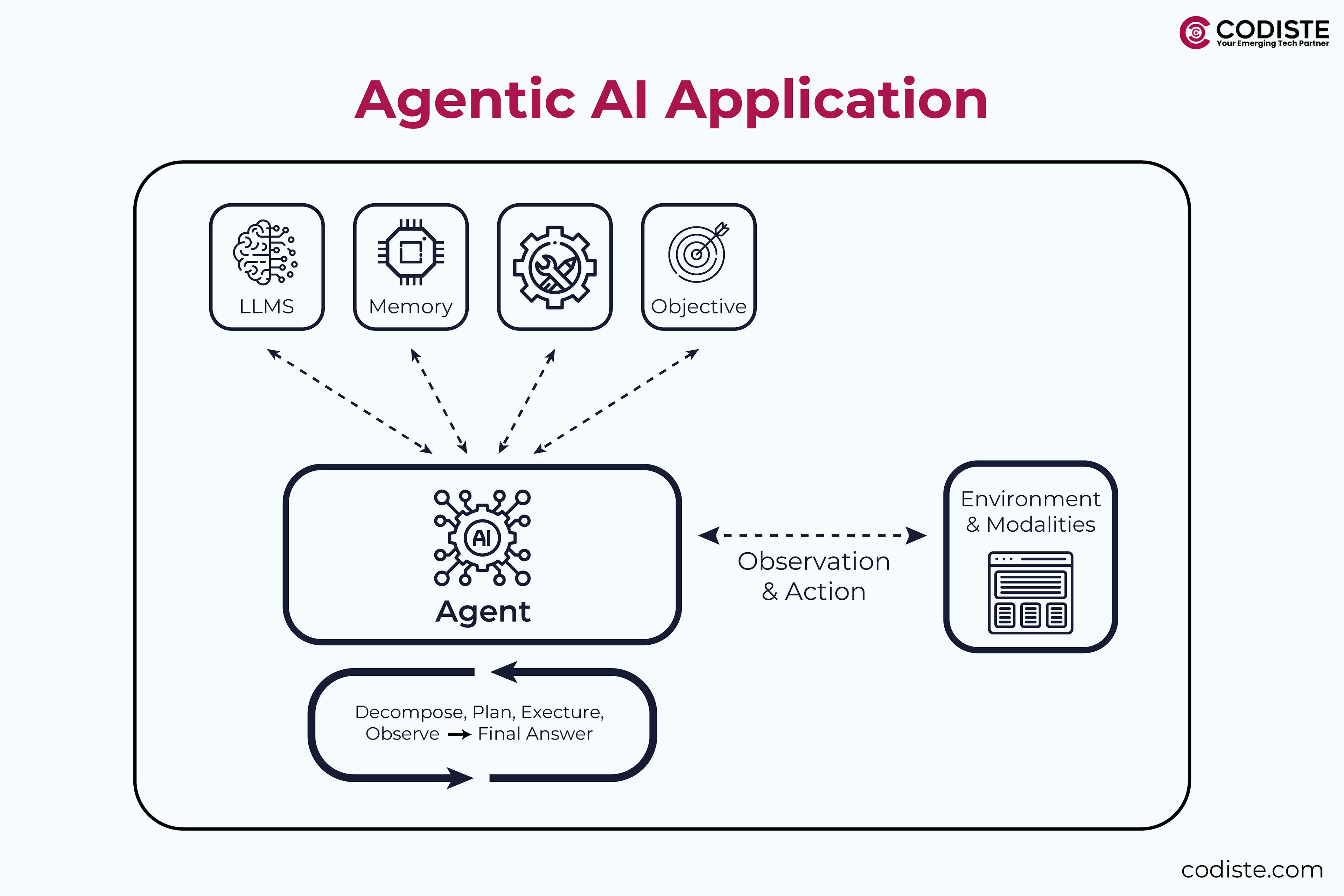
AI keeps evolving. Agentic AI is a big step. It's autonomous and adapts to tough settings. Key features show its power to change things.

Agentic AI acts on its own. It adjusts in real time and resolves multi-step problems. It is driven by developments in cognitive technology, machine learning, and large language models (LLMs).

This shift moves from basic AI to goal-focused systems. They act smarter and more directed.
What are Agentic AI Applications?

Core Traits of Agentic AI

  • Plans and Does Multi-Step Tasks: Breaks big jobs into steps. Plans based on context and goals.
  • Decision-Making Skills: Uses deep reasoning. Checks options with data and past lessons. Adapt for better results.
  • Goal-Driven and Autonomous: Chases aims with little oversight. Fits personal aides to factory work.
  • Aware of Surrounds and Adaptable: Senses changes. Shifts actions to match.

Examples of Agentic AI

  • Autonomous Assistants: Handle schedules, reminders, and info hunts. Learn user tastes over time.
  • AI in Research: Analyze data alone. Form ideas and run tests. Speeds up findings.
  • Robotic Process Automation (RPA): Automate workflows in business. Boosts speed and cuts errors.

Leap into the future with AI agents.

Head-to-Head Comparison: Traditional vs. Agentic AI

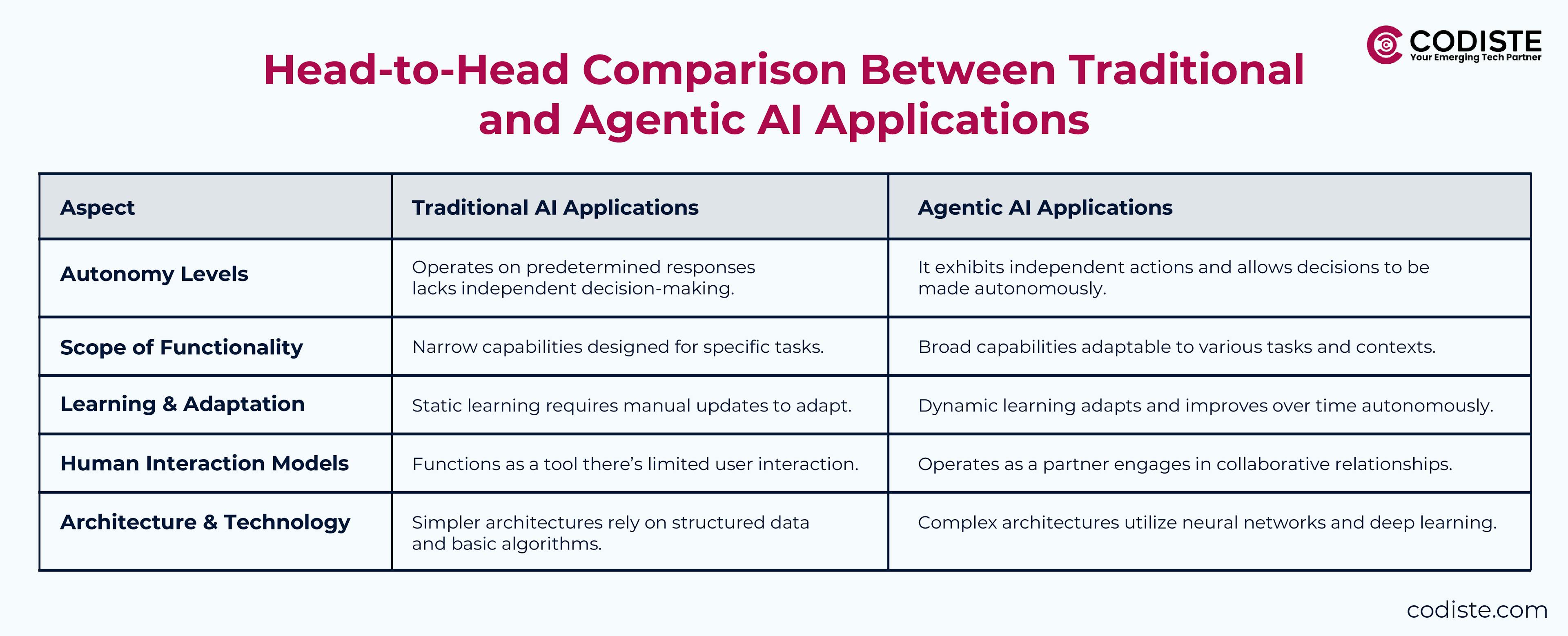
AI grows fast. Spotting differences matters. This comparison shows key traits. It highlights what each offers.
Head-to-Head Comparison Between Traditional and Agentic AI Applications

These differences guide AI picks for business. Traditional AI suits set tasks. Agentic AI brings flexibility.

Technical Setup and Key Points

Building agentic AI needs careful thought. It ensures systems work well and scale. We cover frameworks, setup needs, metrics, and hurdles.

Development Frameworks and Methods

Pick the right tools for agentic AI.

  • Machine Learning Frameworks: Use TensorFlow, PyTorch, or Keras. They build and launch neural nets. Support complex designs for learning systems.
  • Reinforcement Learning: Key for agents. They learn via environmental interactions. Tools like OpenAI Gym simulate and train.
  • Multi-Agent Systems: For team agents. Frameworks like JADE aid talks and joint goals.

Setup Needs

Agentic AI demands strong support.

  • Cloud Computing: Power and scale are provided by platforms like AWS, Google Cloud, and Azure. Provide GPUs or TPUs for quick training.
  • Data Storage and Handling: Use big datasets. Need data lakes or spread databases for smooth work.
  • Real-Time Data Work: For live changes. Tools like Apache Kafka or Spark handle streams. Help AI adjust quick.

Evaluation Metrics and Tests

Check agentic AI performance well.

  • Performance Metrics: Use accuracy, precision, recall, F1 score. Add speed and adapt checks for agents.
  • Simulation Testing: Test in fake settings first. Spot issues and refine choices.
  • A/B Testing: Compare models in real use. Find the best setups.

Technical Setup and Key Points

Agentic AI has special issues.

  • Decision Complexity: Solo choices add design twists. Pick algorithms for the right context picks.
  • Ethics and Bias: Addressing Biases in Data. Ensure clear choices to build trust.
  • Safety and Trust: Vital in key areas like health or self-driving cars. Test hard to cut risks.
  • Adapt and Learn: Build for ongoing growth. Avoid forgetting old lessons.

These points ensure strong agentic AI. With the right tools, setup, checks, and fixes, firms unlock full power. Build reliable, ethical systems.

Conclusion

Agentic AI transforms fields. It lets systems learn, adapt, and run alone. Firms can spot needs via use cases and mixed models.

As agentic AI grows, it shapes business and client ties. It leads to smarter futures. Traditional AI still offers value.

Firms can blend both. Pick what fits the needs and growth. AI boosts skills and tackles hard issues.

Choose agentic or traditional AI wisely. It depends on your path. If unsure, seek expert help for the best results.

At Codiste, we excel in AI development. Our experience delivers proven outcomes. Reach out today.

FAQs

What is the main difference between agentic and traditional AI?

Conventional AI adheres to preset rules and is task specific. Agentic AI functions autonomously without constant input, adapts, and manages complicated goals.

Can agentic AI replace traditional AI completely?

No. Traditional AI suits simple, narrow jobs well. Agentic AI adds flexibility for broader needs. Many firms, like those partnering with Codiste, use both for balanced results.

How does agentic AI improve business efficiency?

It automates multi-step processes and decisions. This cuts errors and speeds work. For tailored setups, consult experts like Codiste's team.

What are common challenges in building agentic AI?

Key issues include ethics, bias, and safety. Robust testing helps. Firms with deep experience, such as Codiste, guide ethical builds.

Is agentic AI suitable for small businesses?

Yes, if scaled right. It boosts tasks like automation. Start with advice from AI specialists like Codiste to fit your size.

How can I get started with agentic AI?

Assess needs first. Then, pick frameworks and test. For smooth starts, book a call with pros like Codiste for custom plans.

Nishant Bijani
Nishant Bijani
CTO & Co-Founder | Codiste
Nishant is a dynamic individual, passionate about engineering and a keen observer of the latest technology trends. With an innovative mindset and a commitment to staying up-to-date with advancements, he tackles complex challenges and shares valuable insights, making a positive impact in the ever-evolving world of advanced technology.
Relevant blog posts
Why Your Fintech Should Choose a Managed MCP Server Service Now
Artificial Intelligence
December 26, 2025

Why Your Fintech Should Choose a Managed MCP Server Service Now

The Ultimate Development Guide for an AI Marketing Agent in 2025
Artificial Intelligence
February 20, 2025

The Ultimate Development Guide for an AI Marketing Agent in 2025

Talk to Experts About Your Product Idea

Every great partnership begins with a conversation. Whether you’re exploring possibilities or ready to scale, our team of specialists will help you navigate the journey.

Contact Us

Phone