





Artificial Intelligence
June 12, 2024

An AI voice agent is software that answers and makes customer calls in natural speech. It understands what the caller wants, takes action in your systems, such as checking an order or booking a slot, and replies with a human-sounding voice. When a call needs a person, it hands over with a summary.
Customers expect fast answers: according to Salesforce, many customers are frustrated when service cannot resolve their issue straight away. This guide explains how AI voice agents work in customer service, the call workflow step by step, where they help, where they fail, and how to choose one.
An AI voice agent is a phone-based AI system that holds a real conversation with a caller. It uses speech recognition and natural language processing (NLP) to understand the caller, a language model to decide what to do, and text-to-speech to reply. It can answer questions, solve common problems and complete tasks without a person on the line.
Unlike an old Interactive Voice Response (IVR) menu ("press 1 for billing"), the caller just says what they need. Unlike a chatbot, it works by voice, on the phone line customers already use. A voice agent is one type of AI agent: software that plans and acts toward a goal using tools.
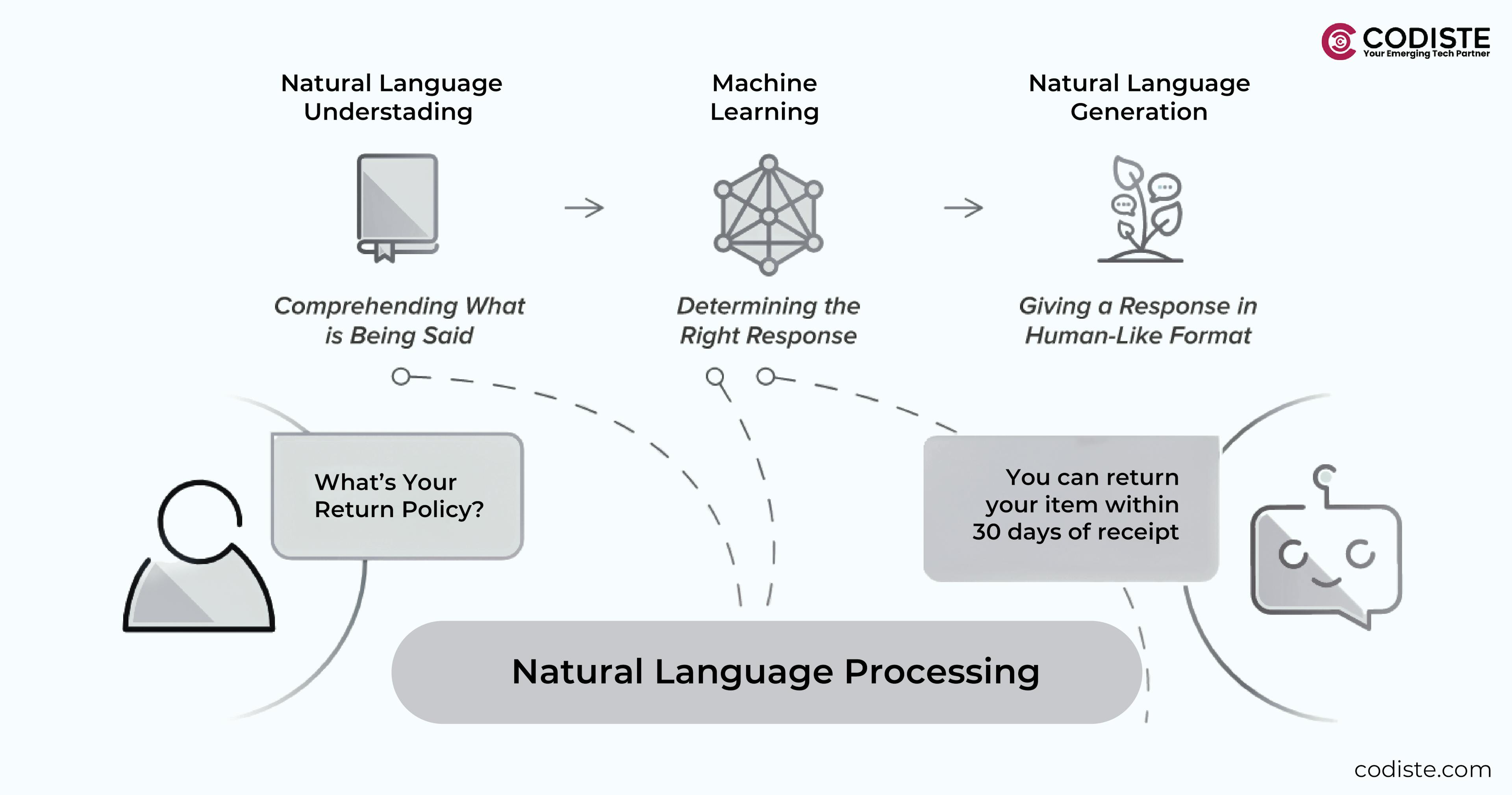
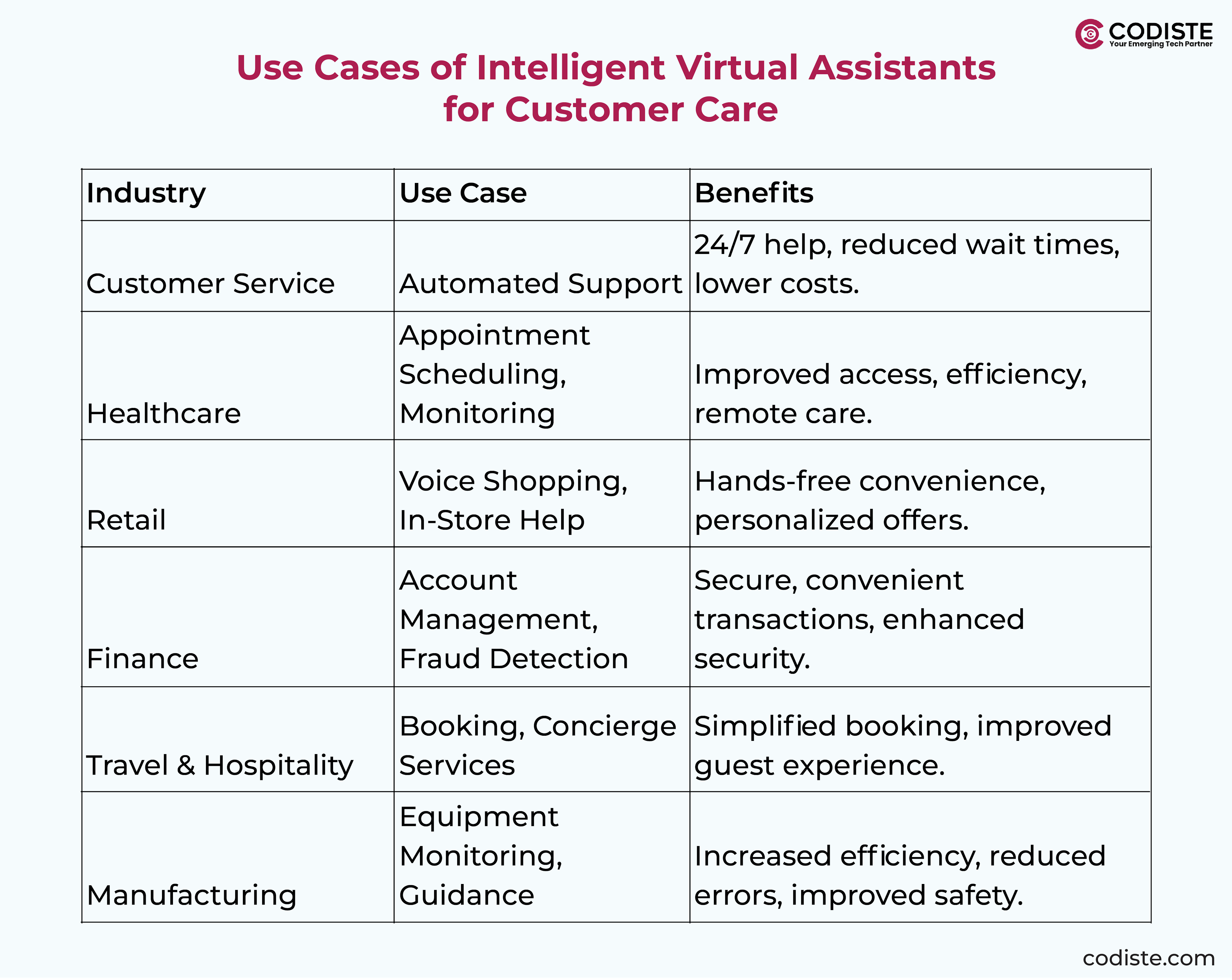
AI-based virtual assistants are now utilized in retail and healthcare, as well as in the banking and telecommunication sectors. In the retail field, they are responsible for helping customers to make their orders and giving them the status of the parcel. They also help in returning the payments and answering any questions they have about the products. In the case of the banking sector, they can provide answers to questions about account balance, transaction details, and fraud occurrences.
AI in healthcare assists majorly in setting up a doctor's appointment, sending medical reminders, and answering general questions about health. Conversational AI in customer support is multi-functional, and it is a useful resource for every business, regardless of which category it is in or how big it is.
AI voice agents answer every call at once, so routine callers do not wait in a queue. That shorter wait improves customer satisfaction, especially at busy times.
AI-driven voice assistants cut the cost of handling routine calls, because one system can take many calls without extra staff. They also give the same quality of answer on every call.
Voice agents answer at night, at weekends and on holidays, so customers do not have to wait for business hours.
Connected to your CRM, a voice agent can use a customer's history to give relevant answers and suggestions. For example, if a customer often buys a certain product, the agent can suggest related items. This builds stronger relationships and supports sales.
As call volume grows, hiring and training new staff takes time and money. A voice agent can take extra calls straight away, so service stays consistent at peak times.
How are top companies scaling AI agents without chaos?
Get behind the scenes playbook that others won’t share.
Every call follows the same loop. Each step must be fast, because callers expect a reply within about a second.
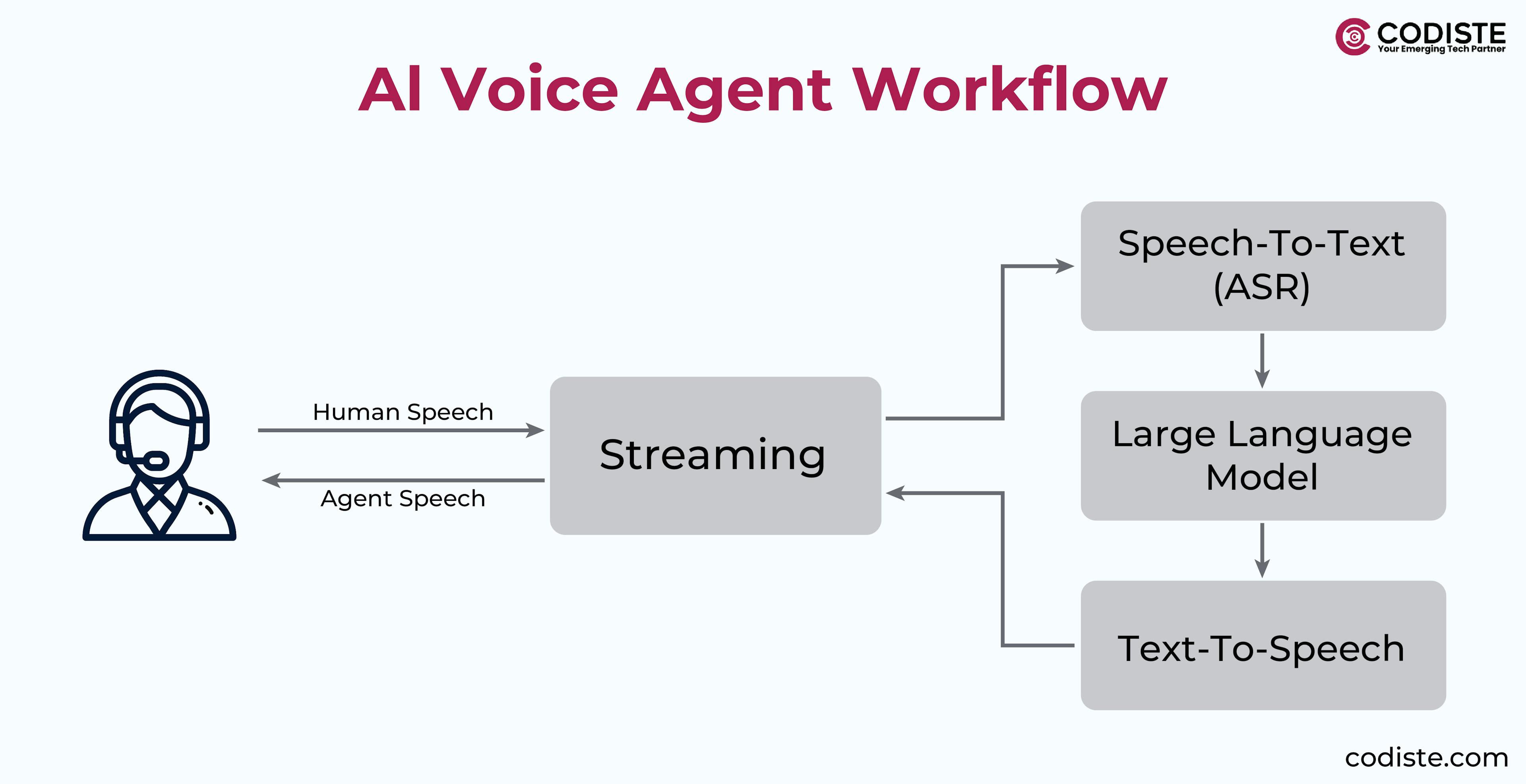
The agent picks up at once, greets the caller and, where needed, checks who they are (phone number, account number or a security question).
Automatic speech recognition (ASR) turns the caller's words into text while they are still speaking.
A language model works out what the caller wants, for example "where is my order", and decides the next step: answer, ask a question, take an action or hand over.
It reads or updates your CRM, order system, calendar or knowledge base through APIs: it checks the parcel status, books the appointment or logs the ticket.
Text-to-speech speaks the reply in a natural voice. Steps 2 to 5 repeat for each turn of the conversation.
If the caller is upset, the request is complex or the caller asks for a person, the agent transfers the call with a written summary. At the end it logs the call, the outcome and the transcript.
Voice agents are the speaking part of a virtual assistant. The assistant decides what to do; the voice agent handles the phone conversation. In customer service, one assistant can answer by phone, chat and email, with the voice agent covering calls.
A key feature of AI customer service agents is that they connect to existing business systems such as CRM, ERP and knowledge bases, so they answer with accurate, current information.
AI voice agents bring clear advantages, but they also face some problems.
Voice agents are moving closer to human-like conversation and will handle more complex calls.
Start with one call type, such as order status, and measure wait time, containment rate and customer satisfaction before and after. For a full buyer's checklist, see our guide to choosing an AI voice assistant for business.
An AI voice agent answers calls in natural speech, takes actions in your systems and passes hard calls to people. It works best on routine, high-volume calls and should always offer a quick route to a human.
Codiste is an AI agent development studio that builds custom voice AI agents, and Dialora is Codiste's voice agent platform for business phone lines. Talk to us about the calls you want to automate.

CTO & Co-Founder | Codiste
Nishant builds where ambitious ideas meet production reality. As CTO & Co-Founder at Codiste, he has helped ship 150+ AI systems. Through The CTO Story, he gets technical leaders talking about what rarely makes the slide deck: the trade-offs, failures, and decisions behind what actually ships.


Every great partnership begins with a conversation. Whether you're exploring possibilities or ready to scale, our team of specialists will help you navigate the journey.