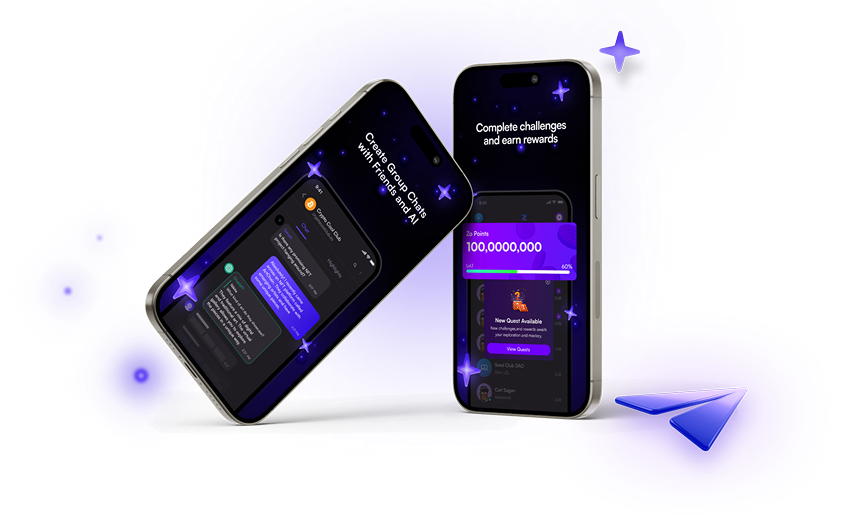
About the Project
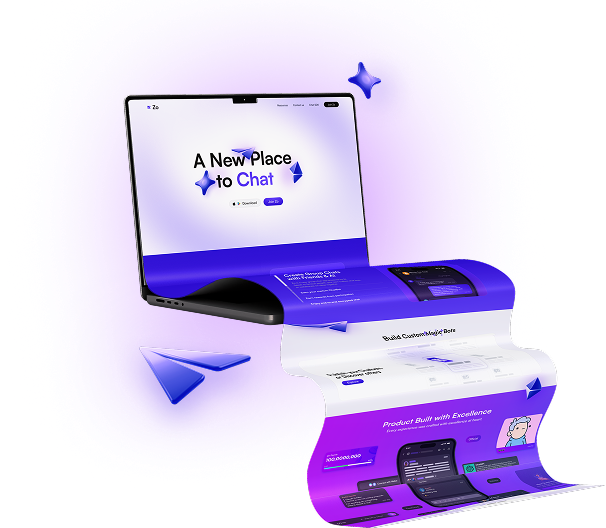
Zo.me is an exciting merger of decentralized communication infrastructure, blockchain technology, and artificial intelligence. This ground-breaking platform enables users to engage in the nascent agentic web economy while meeting the increasing demand for privacy-focused, AI-enhanced social interactions.
Uncovering The Root Problem
The digital communication landscape faces several critical challenges:

Privacy Concerns
Centralized platforms control user data and communications

Limited AI Integration
Existing platforms offer basic AI features without deep integration

Fragmented Ecosystem
Users struggle to manage communications across multiple platforms

Lack of Ownership
Users cannot monetize their digital interactions or create custom AI tools

Web3 Communication Gap
Limited secure communication solutions for crypto communities and DAOs
Codiste's Implications
Decentralized AI Ecosystem
To establish a federated, censorship-resistant communication network where AI agents function as equals to human users, Zo.me makes use of the Matrix Protocol.
Multi-Agent Orchestration
Multi-agent group conversations on the platform facilitate complicated workflows, enabling seamless collaboration between humans and AI on activities ranging from decision-making to content creation.
Cross-Chain Integration
Integrated wallet-to-wallet messaging allows for safe communication throughout the Web3 ecosystem by supporting several blockchain networks.
35+ Web3 Projects Made Easy With Codiste.

Solution Architecture

Matrix Synapse Server

GoLang

Python

TypeScript

React.js

Next.js
Core Features & Capabilities

AI-Powered Communication
- Zai Assistant: Personalized AI leveraging top language models (OpenAI, Gemini, Llama, Mistral)
- Real-time Insights: Web search capabilities and contextual responses
- Agent Clones: Users can create AI versions of themselves for automated interactions

Social & Collaboration Tools
- Multi-Agent Groups: Humans and AI agents collaborate in shared spaces
- Echo Chambers: AI-to-AI conversations for brainstorming and exploration
- Unified Inbox: Centralized communication management
- Dynamic Profiles: Showcase AI clones, NFTs, and crypto assets

Ecosystem & Monetization
- AI Mini App Store: Create, deploy, and monetize AI-powered applications
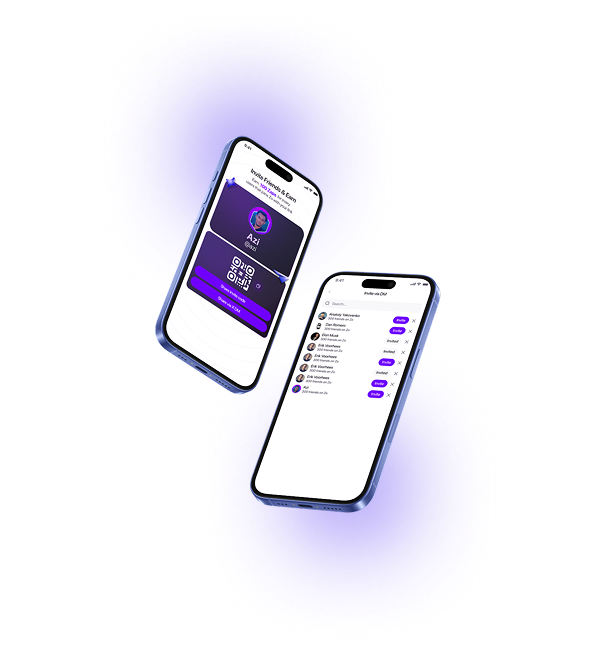
- Rewards System (Zaps): Gamified incentives for platform participation
- DAO Support: Streamlined governance and decision-making tools
- Quest System: Structured engagement activities
Ecosystem & Monetization
- Only platform combining deep AI integration with true decentralization
- Comprehensive mini-app ecosystem enabling user monetization
- Cross-chain communication capabilities
- The Matrix Protocol foundation ensures long-term interoperability
The Technical Front

Scalability Solutions
The platform may expand without sacrificing fundamental values because of the Matrix Protocol base, which guarantees horizontal scalability while preserving decentralization.

AI Integrated Architecture
A unique Python framework makes it possible to integrate several AI models with ease while preserving a consistent user experience across various AI capabilities.

Security & Privacy
Secure and decentralized communication with end-to-end encryption, federated architecture, user-owned data, and blockchain-based identity verification.
Business Impact & Outcomes

User Empowerment
- Digital Ownership: Users control their AI agents and mini-apps
- Monetization Opportunities: Revenue sharing through mini-app ecosystem
- Privacy Protection: Decentralized architecture ensures data sovereignty

Community Building
- DAO Enablement: Provides infrastructure for decentralized organizations
- Cross-Chain Communication: Bridges different blockchain communities
- Incentivized Participation: Rewards system encourages active engagement

Innovation Catalyst
- Agentic Web Foundation: Positions users for the emerging AI-agent economy
- Open Ecosystem: Encourages third party development and integration
- Interoperability: Matrix Protocol ensures compatibility with future platforms
Blockchain might be complicated, but not our solutions.
Business Impact & Outcomes
The shift to user-owned, AI-enhanced digital communication is embodied by Zo.me. Through the integration of the latest AI capabilities with decentralization principles, the platform promotes itself as essential infrastructure for the upcoming digital interaction generation.
The project shows how well-considered technological integration may concurrently address several industry obstacles, including digital ownership rights, privacy issues, AI accessibility, and Web3 acceptance barriers.
Why Codiste
Codiste, with its precision, has proved that the Zo.me project effectively demonstrates that a decentralized AI communication platform can provide complex user experiences while adhering to fundamental Web3 principles. The platform's revolutionary technical architecture and strategic market positioning provide new possibilities for digital connection, community creation, and economic participation in the AI-driven future.
This case study demonstrates how emerging technologies can be coupled to generate new categories of digital products that cater to both immediate customer needs and long-term technological advancement.
The Clients Opinion

Vai Gupta
CTO & Co-Founder | The Real Estate Investment platform

They truly do everything up to a very high standard. Codiste pvt ltd has successfully delivered a functional app praised in many publications for its neatness and speed. They have frequently communicated via Slack and managed the project efficiently using Jira. Their extensive knowledge and humble attitude have been hallmarks of their work.

Gavin Langston II
CEO | DiveWallet

I am pleased to say that working with Codiste has been a positive experience for our community. The project is now complete and the feedback we have received on the platform has been overwhelmingly positive. Throughout the project, the team maintained open communication lines regularly updating us on progress and following the agreed timeline. They delivered an app with impressive functionalities and accepted every challenge we gave them. Overall we are satisfied with the outcome.

Annemarie Maidment
CEO | Medizen App

Codiste pvt ltd delivered the project within the given timeline and budget. Their communication and collaboration were outstanding using Slack Lucidhart and Miro. The team was reliable well-organized and proactive.

Zushan Hashmi
CoFounder | Ninza NFT

They communicated clearly and outlined the product roadmap for us. It has been very easy to work with them. Made us profitable on NFT Marketplace that made an amazing journey.

Michael Lawton
Founder | ML Estimation

They communicate clearly and outline the product roadmap for us. It has been very easy to work with them. Made us profitaable on NFT Marketplace and which made amazing journey.

Isla Munro-Hochmayr
Founder | FTW Dao

Codiste Team was very much helpful and they went detailed oriented and successfully launched our venture investment platform which helped us to achieve to raise initial fund through NFT selling team has gone above and beyond with all suggetions with their expertise Highly recommended for Blockchain professional studio.

Patrick Riley
CEO | Apollo

Codiste dedication goes beyond delivering the product; they are involved in the entire process from concept to final product as Multichain Decentralised Crypto Launchpad No Code Token creator DEX and even in presenting to potential customers. Their flexibility and instant communication through Slack make them an indispensable part of my team.

Morris Lee
Founder | Area Company LLC

Working with Nishant & Codiste Team was super productive, the team is technical, easy to communicate with, and very professional. Highly recommended.

Naga Samineni
Co-Founder | MetaKeep

Nishant & Codiste Team has worked with our team on Blockchain and it was a great experience. They helped our customers with Web3 wallet integration. We have partnered with Codiste Team for long term now and they're a great and highly techical team to be a strategic partner with. Highly recommended for Blockchain development.

Sofiane Bennacer
Founder | The Scribbled Lab

100% satisfaction rate. That is what I get partnering with Codiste. They delivered our MVP in just 8 weeks, with dedicated support and communication. This makes them an invaluable ally for anyone seeking AI solutions.

Abolade Olusanya
Founder | CRM Growth

What sets Codiste apart is their ability to understand complex requirements and deliver tailored solutions that drive real results. They were always prompt, communicative, and transparent throughout the project, which made the entire process seamless and stress-free.

Shelle Fantastic
Head of Sale | Corum8

Blockchain, AI service from Nishant & Codiste Team it was productive, Team Technical knowledge on Blockchain, AI and domain expertise for Healthcare and Sportstech is commendable. i was more than happy to work with a very calm and enthusiastic team.
Smart Recommendations

Have a Project?
Reach out to our technical support team for immediate assistance and expert guidance.