Source Workloads
Applications, databases, and dependencies are inventoried with their owners and operating requirements.
Simplify your cloud migration with a clear plan for cost, continuity, and performance. Codiste assesses your existing environment, manages the migration of applications, databases, and infrastructure, and prepares your team to operate and optimise your cloud environment with confidence.


Authentication, scheduled jobs, shared storage, and database connections can remain tied to the old environment. Moving a server without mapping those dependencies can interrupt the business workflows it supports.
Oversized resources, software licences, data transfer charges, and temporary dual-running costs can undermine the business case. A migration budget needs to account for both the transition and ongoing operations.
Incomplete synchronisation, missed configuration changes, or unclear recovery responsibilities can delay the switch. Your team needs agreed validation checks and a rehearsed response when a workload is not ready.
Cloud migration services help organisations move applications, data, and infrastructure between on-premises systems, private clouds, and public cloud platforms. They cover assessment, migration planning, destination setup, data transfer, application testing, cutover, and the operational handover needed to manage workloads in their new environment.
The right approach depends on the workload. Some applications need limited changes; others require replatforming or redesign. Codiste’s cloud migration consulting services establish what should move, what should stay, and how to sequence the work around your business.
Choose the right approach for each workload. We assess rehosting, replatforming, refactoring, replacement, retention, and retirement, with relocation considered where appropriate. Your roadmap sets migration waves, target architecture, cost assumptions, acceptance criteria, and the responsibilities needed to manage cutover.
Connect cloud workloads with the systems that stay on-premise. We plan application placement, networking, identity, and data flows across both environments. The result is a defined hybrid architecture that accounts for latency, access requirements, operational ownership, and dependencies that cannot move together.
Move workloads between providers or consolidate fragmented environments. We assess service compatibility, data egress, licences, and changes to provider-specific integrations. Application migration can include containerisation or Kubernetes migration where justified, with a destination design and validation plan suited to your team.
Transfer business data with checks for consistency and application compatibility. We assess schemas, stored procedures, permissions, and integrations, then configure transfers and continuous synchronisation where supported. You receive reconciliation results and a cutover runbook covering write handling, recovery, and final acceptance.
Keep the new environment maintainable and cost-aware. We review usage, right-size resources, establish cost allocation and alerts, and document operating procedures. Post-migration FinOps and managed support can cover monitoring, maintenance, incident response, and recovery testing within an agreed scope.
Tools are chosen per workload and matched to the platforms your team already runs. These are workload-dependent options, not claims of partnership or certification.
Every migration moves in four stages, with a representative pilot before the wider rollout and acceptance criteria agreed before any workload switches over.
Map workloads and dependencies, establish performance and cost baselines, and choose a migration approach for each application. Agree on scope, wave order, recovery requirements, and acceptance criteria. Your team receives a migration roadmap with delivery assumptions and clear responsibilities.
Build the landing zone with networking, IAM, encryption, backups, and monitoring. Use Infrastructure as Code for repeatable provisioning. Migrate a representative workload, test integrations and recovery procedures, and use the results to refine the remaining migration waves.
Complete data reconciliation, functional checks, performance testing, and user acceptance testing. Execute the approved cutover within agreed windows, with final synchronisation and controlled traffic changes. Monitor against recovery triggers and record outstanding issues before confirming workload acceptance.
Stabilise production, review actual costs, and tune resources against the baseline. Hand over configurations, monitoring, and operating runbooks with defined support ownership. Retire source systems only after acceptance and the agreed recovery or retention period.
Understand what should move first, what needs to change, and what the transition will involve. Discuss your applications, dependencies, and project scope with Codiste.
Book a 30-minute migration callA controlled migration gives every workload a defined route from its current environment to production. We prepare the destination before transfer, validate the result before cutover, and keep recovery requirements visible throughout.
Applications, databases, and dependencies are inventoried with their owners and operating requirements.
The landing zone establishes networking, identity, security, backups, and monitoring before workloads arrive.
Workloads and data move to the target, with ongoing replication where supported.
Data checks and application tests confirm readiness against the agreed acceptance criteria.
Approved workloads switch to the target, followed by monitoring, stabilisation, and handover.

Identity, permissions, encryption, and logging are reviewed across the source, transfer path, and destination.

Reconciliation and replication checks identify missing records, conflicting writes, and unresolved transfer issues.

Recovery plans define decision owners, triggers, and how transactions created after cutover will be handled.

Monitoring compares application behaviour and resource consumption with the baselines agreed before migration.
Cloud migration architecture from source workloads through cloud foundation, transfer, validation, and production cutover. Source systems stay in place during the transition until the migrated workload is accepted.
Move applications and servers ahead of lease deadlines or hardware retirement. We sequence connected workloads, confirm dependencies, and plan source-system decommissioning after acceptance.
Identify where lift and shift migration is sufficient and where applications need changes. The migration plan separates essential compatibility work from wider modernisation priorities.
Move databases facing capacity, maintenance, or platform constraints. Compatibility checks, replication options, and application testing guide the transition to the selected destination.
Bring fragmented workloads onto a preferred platform. We assess service replacements, data egress, licences, and retained dependencies before defining the migration waves.
Prepare infrastructure and connectivity for analytics and AI workloads. Data quality, permissions, supported interfaces, and evaluation remain explicit requirements alongside the migration.
Migration priorities vary with the systems your business runs. We assess application dependencies, data access, peak demand, and recovery requirements in the context of your industry.
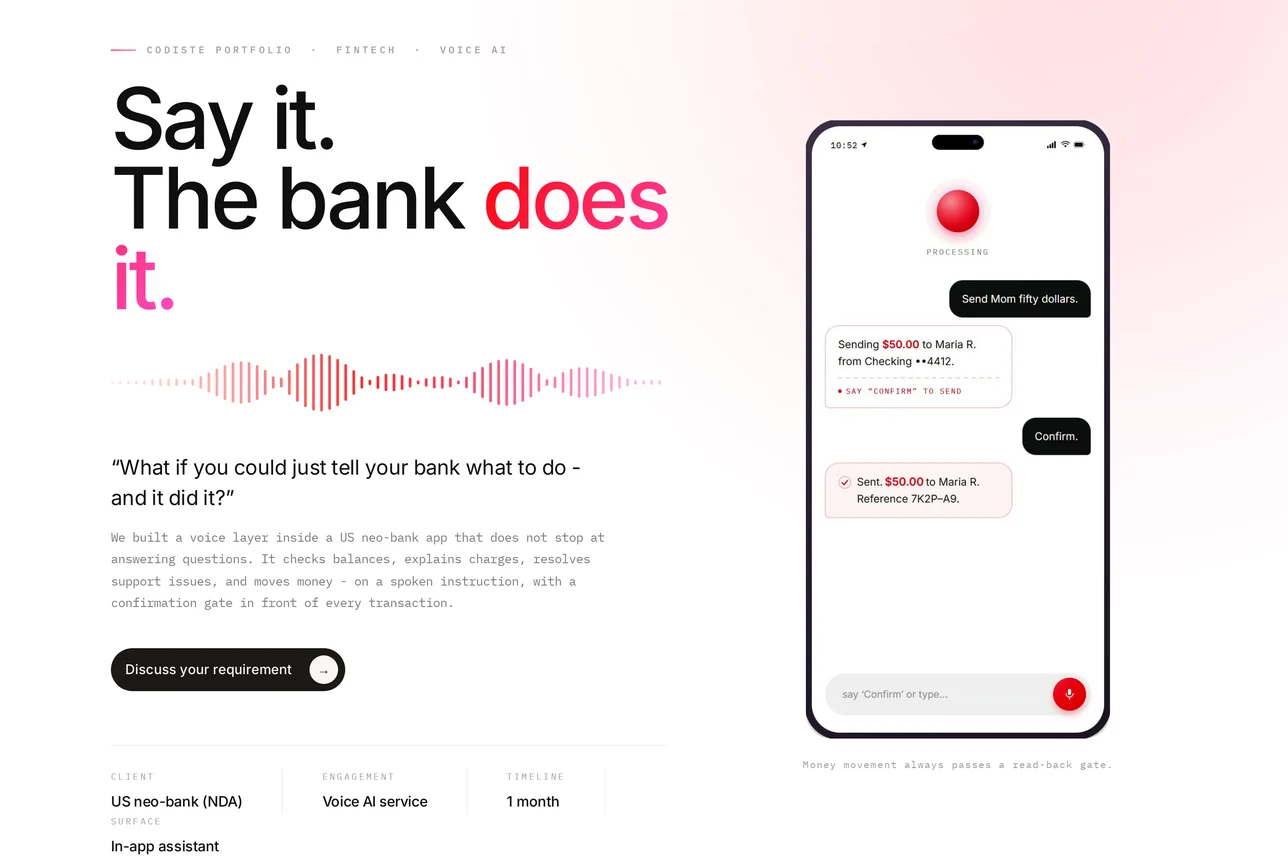
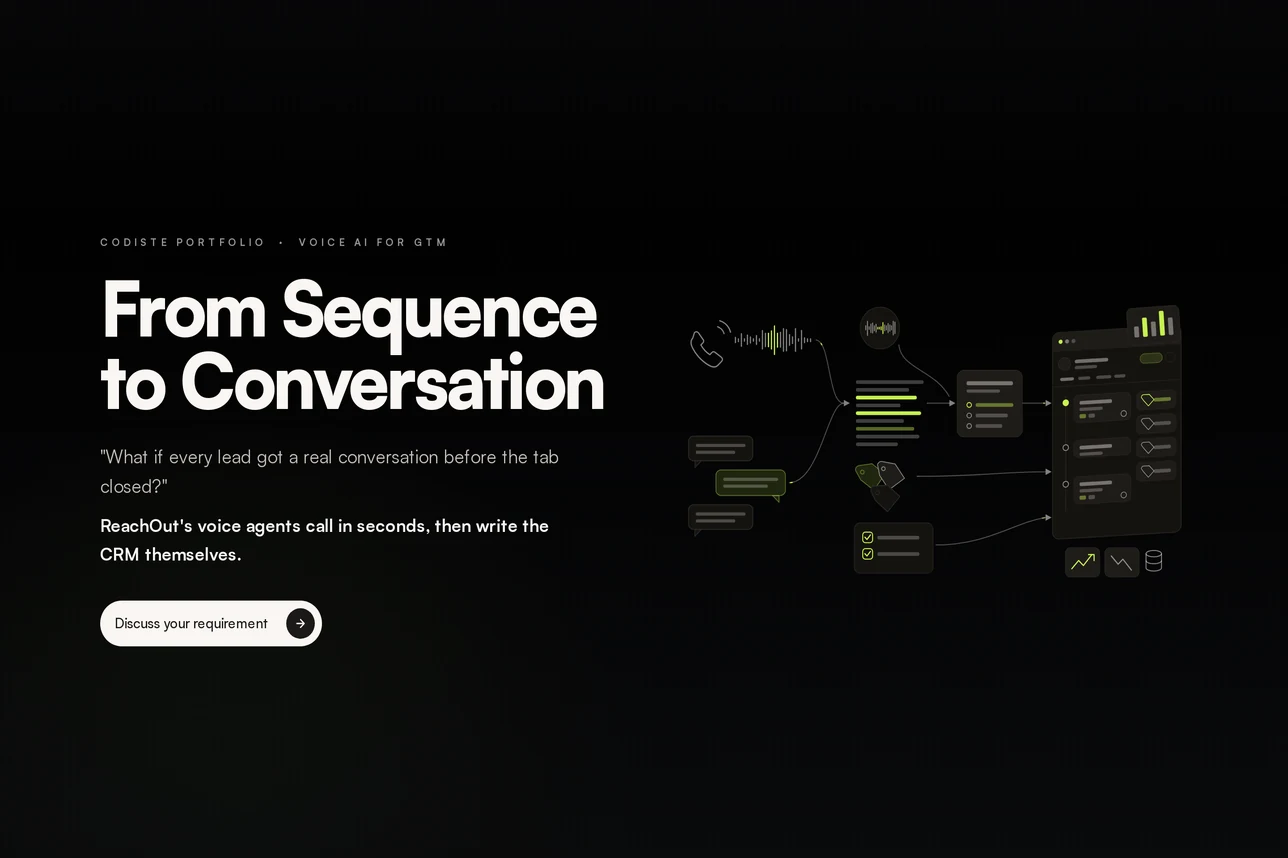
See the results our AI voice agents deliver in regulated and high-volume industries.
Choosing between cloud migration service providers means evaluating who will make the technical decisions and how your team will accept the work. Our approach connects scoping, engineering, and operational handover.
Codiste’s delivery model keeps the engineers who scope the work involved in implementation. Our application and AI engineering experience informs decisions about integrations, data access, and runtime requirements in the target environment.
Our services approach establishes architecture, timeline, and build cost before implementation. For migration, that means agreeing on workloads, destination design, transition assumptions, and acceptance criteria before expanding the work.
Codiste’s services include client ownership of custom deliverables and documented handover. Migration delivery brings together configurations, operating instructions, monitoring, and support responsibilities so your team can maintain the new environment.
Define the migration scope before committing to the transition. Codiste helps you assess workload readiness, compare destination options, and establish a practical plan for delivery and ongoing operations.
Share your current environment, priority workloads, and target timeline. We’ll help you define the assessment scope and the next steps for your migration.